Choosing the right spot for a hot tub involves more than finding enough room in the backyard. The distance between the hot tub and the house can affect safety, privacy, maintenance, drainage, and everyday convenience. A well-chosen location makes it easier to enjoy your hot tub while keeping your home and outdoor space protected.
So, how much space should be left between a hot tub and the house? There is no single distance that works for every property. The right spacing depends on the hot tub model, access requirements, electrical safety rules, local building codes, and the condition of the ground.
Understanding these factors before installation can help prevent costly changes later and ensure the hot tub fits comfortably into your outdoor space.
How Far Should a Hot Tub Be From the House?
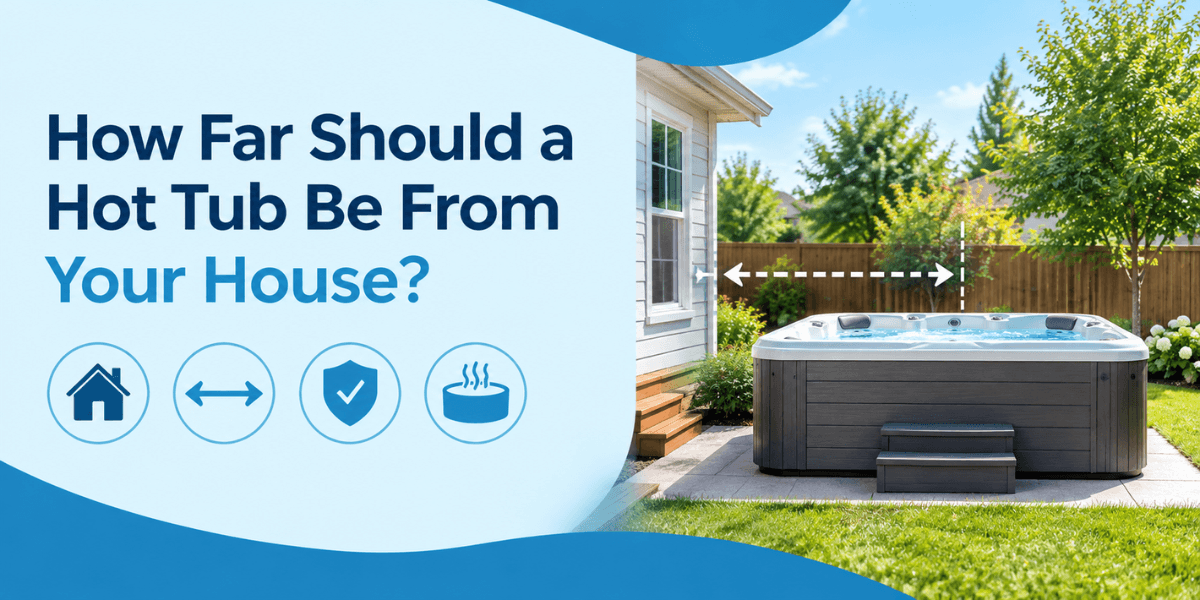
The ideal hot tub distance from the house depends on your property’s layout, the manufacturer’s installation instructions, and local building codes. For practical planning, leave about 8-10 feet between the house and the hot tub to allow access, but this isn’t a universal legal minimum.
Some hot tubs need additional space for equipment servicing, cover lifters, and safe entry and exit. Before choosing a location, check the owner’s manual and confirm local electrical and building requirements. Electrical equipment must also meet applicable safety clearances.
Think about everyday convenience, too. Placing the hot tub near a back door can make winter use more comfortable, while a more secluded spot may offer greater privacy.
What Is the Minimum Distance Between a Hot Tub and a House?
The hot tub minimum distance from a house is not the same for every property. Requirements can vary based on local codes, the hot tub’s design, electrical installations, and the type of surface supporting it.
Rather than relying on a general measurement, use these practical considerations when planning the space.
| Planning Factor | What to Consider |
|---|---|
| Manufacturer clearance | Leave enough room for the required access panels and servicing. |
| Electrical safety | Follow applicable electrical codes and required clearances. |
| Foundation and support | Choose a stable, level surface designed to support the filled hot tub. |
| Drainage | Prevent water from collecting against the house foundation. |
| Cover access | Allow enough room to open, remove, or operate the cover. |
| Entry and exit | Provide a clear, slip-resistant path to and from the house. |
A local building department or qualified installer can confirm the applicable requirements for the property. Never assume that a small gap automatically meets electrical, structural, or access requirements.
Factors to Consider When Choosing a Location
The distance from your house is only one part of choosing the right spot. The surrounding space should also support safe use, easy maintenance, and long-term comfort.
Protect Your Home’s Foundation
Place the hot tub on a stable, level surface that can support its full weight when filled with water and occupied. A reinforced concrete pad or another appropriately engineered base may be suitable, depending on the model.
Plan drainage carefully so splashed water and routine draining do not collect against the house. Persistent moisture near the foundation can create problems over time. Follow local drainage requirements and your installer’s recommendations.
Leave Room for Maintenance
Hot tubs need occasional servicing, including filter cleaning, plumbing inspections, and equipment repairs. Leave enough space around the access panels for a technician to work comfortably.
Some models allow access from specific sides, so the necessary clearance may differ. Check the manufacturer’s specifications before finalizing the position.
Consider Doors, Windows, and Rooflines
A hot tub close to the house can be convenient, but consider nearby doors, windows, roof overhangs, and downspouts. Water dripping from a roof can affect the cover, while runoff may carry dirt into the spa.
Also consider ventilation if the hot tub is near doors or windows. Steam and moisture may enter the house, particularly in colder weather. A suitable outdoor location with enough airflow can help limit this issue.
Where Should You Place a Hot Tub?
It starts with how the space will be used. The right location should balance convenience, privacy, safety, and access.
Near a Back Door or Patio
Placing a hot tub near a back door makes it easier to reach during cold weather and helps keep the walk between the house and spa short. Make sure the route is well-drained, slip-resistant, and free of obstacles.
In a Private Corner of the Yard
A secluded corner can offer a more relaxing setting, especially if neighboring homes overlook the yard. Fencing, landscaping, or privacy screens can help create separation without blocking equipment access or airflow.
On a Suitable Deck or Patio
A deck or patio may be a good option, but it must be designed to support the weight of the filled hot tub and its occupants. Consult a qualified contractor or structural engineer before placing a spa on an existing deck.
Ready to create the perfect backyard retreat? Blue Wave Spas can help you find the ideal hot tub placement for your outdoor space, with options that suit your layout, lifestyle, and relaxation needs.
Electrical Safety and Local Requirements
Electrical safety should be a priority when deciding how close a hot tub can sit to your home. The U.S. Consumer Product Safety Commission warns about electric shock risks around pools and spas, making proper installation and protection essential.
Have a qualified electrician install the required wiring, grounding, bonding, and ground-fault circuit interrupter (GFCI) protection according to applicable codes. Keep electrical connections and equipment protected from water, and never use extension cords as a substitute for proper hot tub wiring.
FAQs
-
Can a Hot Tub Be Placed Near a Property Boundary?
Yes, but local building codes and zoning rules may require a minimum setback from property lines. Check with your local building department before installation, and review any restrictions that may apply.
-
How Much Clearance Is Needed to Remove a Hot Tub Cover?
The required clearance depends on the cover design and lifter mechanism. Check the manufacturer’s specifications and allow enough room to open the cover fully without hitting walls, fences, or roof overhangs.
-
Can Roof Runoff Damage a Hot Tub Installed Near a House?
Yes. Water dripping from roof edges or overflowing gutters can introduce dirt and debris, damage the cover over time, and create slippery surfaces. Position the hot tub away from heavy runoff and direct downspouts away from the spa.
-
Should a Hot Tub Be Positioned Near an Outdoor Electrical Outlet?
Not too close. Outdoor hot tubs require electrical installations that meet applicable safety codes, including GFCI protection and required clearances. Have a qualified electrician determine the correct outlet and wiring locations.
Conclusion
The best distance between a hot tub and your house depends on the model, property layout, electrical requirements, and available maintenance space. There is no universal setback that suits every installation.
Prioritize a stable foundation, effective drainage, safe electrical connections, and convenient access. Check the manufacturer’s instructions and local codes before choosing the final position.
Ready to find the perfect spot for your new hot tub? Blue Wave Spas can help you choose a hot tub that suits your backyard space, layout, and relaxation needs. Read expert guidance on hot tub installation and take the next step toward creating a comfortable, safe, and inviting outdoor retreat.