
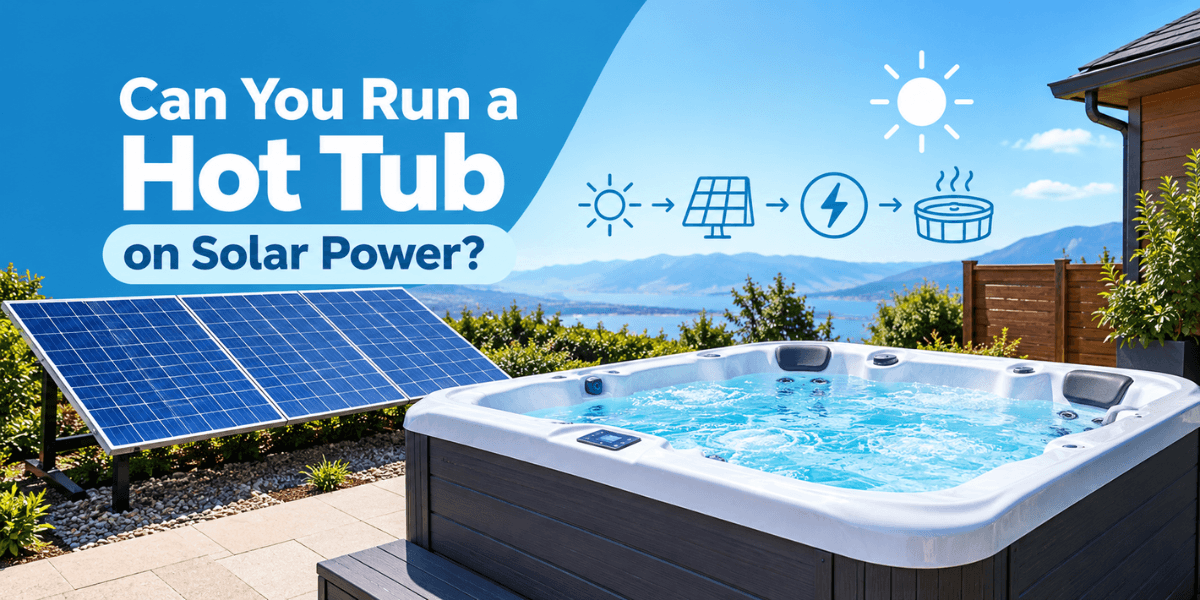
Running a hot tub can use a fair amount of electricity, especially when the water needs to stay warm during colder months. Using solar energy can help decrease dependence on grid electricity and may lead to reduced energy expenses. However, the setup needs to match the hot tub’s power requirements, local sunlight, and how often the spa is used.
The right system can run a hot tub on solar power. The main decision is how to generate enough electricity, manage heating needs, and keep the water warm when sunlight is limited.
Is Solar Power a Practical Option for Running a Hot Tub?
You can run a solar-powered hot tub using electricity generated by solar photovoltaic (PV) panels. These panels transform sunlight into electrical energy, which can operate the hot tub’s heater, circulation pump, and additional electrical features through a well-designed home electrical system.
According to Direct Energy, modern hot tubs may consume around 3 to 7.5 kWh of electricity per day, depending on the model, weather, temperature settings, and usage habits. A solar-powered spa heater can reduce the amount of grid electricity needed for heating by using energy captured from the sun.
There is an important difference between generating enough solar electricity over a day and supplying enough power at the exact moment the hot tub needs it. Heating water requires substantial energy, and the spa may run in the evening or during cloudy weather when panels produce less electricity.
A grid-connected solar system can supply solar power when available and draw electricity from the utility when needed. Adding a battery can store some excess solar electricity for later use, although batteries increase installation costs.
How Do Solar Panels Power a Hot Tub?
Solar panels for hot tubs do not normally connect directly to the spa. A complete setup includes additional equipment to convert and supply electricity safely, ensuring the hot tub receives the power it needs to operate.
Solar Photovoltaic Panels
Panels collect sunlight and generate direct-current electricity. The number needed depends on the hot tub’s energy use, the panels’ output, local sunshine, roof or yard space, and shading.
An Inverter and Electrical Connections
An inverter converts the panels’ direct-current electricity into alternating current for household equipment. A qualified electrician should confirm that the system, circuit, grounding, and protective devices meet local electrical codes and the hot tub manufacturer’s requirements.
Battery Storage or Grid Support
Solar panels generate the most electricity during daylight. A battery can store surplus energy for evening use, while a grid connection provides backup when solar generation falls short. An off-grid system requires careful planning to cover heating loads and periods of low sunlight.
Can You Run a Hot Tub on Solar Panels?
Yes, solar panels can power a hot tub, provided the system generates enough electricity to meet its energy needs.
- Photovoltaic (PV) Panels: Generate electricity to power the hot tub’s built-in electric heater, which warms the water as usual.
- Heating Demand: Water heating requires substantial energy, and the system must also compensate for heat loss. Cold weather, frequent use, a poorly fitted cover, and high water temperatures can increase electricity consumption.
- Solar Thermal Collectors: Capture the sun’s heat and transfer it to water through a suitable system. Unlike PV panels, they generate heat rather than electricity.
- Compatibility and Installation: Solar thermal systems are not automatically compatible with standard hot tubs. A specialist should assess heat exchangers, temperature controls, water sanitation, and manufacturer warranty requirements before installation.
What Affects the Solar System Size You Need?
The right system depends on the hot tub and its surroundings. A solar installer can estimate the required capacity by reviewing energy use and local solar conditions.
| Factor | Why It Matters |
|---|---|
| Hot tub size | Larger tubs generally contain more water to heat. |
| Insulation and cover | Better insulation helps reduce heat loss. |
| Local sunlight | Solar output varies by region, season, shade, and weather. |
| Usage habits | Frequent use and higher temperatures can increase energy demand. |
| Battery storage | Storage can help supply electricity after sunset, but adds cost. |
Solar panels gradually lose output as they age. The US Department of Energy reports that photovoltaic module performance typically degrades by about 0.5% per year, although the actual rate depends on the equipment and operating conditions.
This gradual decline is worth considering when sizing a system for a long-term hot tub installation. A solar assessment should account for expected production over time, rather than relying only on the panels’ rated capacity when new.
How to Heat a Hot Tub with Solar Power Efficiently
Heating a hot tub with solar power involves more than installing panels. Reducing heat loss can help a solar system meet more of the spa’s energy needs.
Keep the Hot Tub Covered
Use a well-fitted, insulated cover whenever the spa is not in use. This helps limit heat loss and reduces the energy required to bring the water back to the set temperature.
Choose an Energy-Efficient Model
Good insulation, an effective cover, and efficient pumps can reduce the electricity needed to maintain water temperature. Blue Wave Spas can help you find energy-efficient hot tubs with features designed for easier maintenance and better heat retention. Explore our collection to find a hot tub that suits your space, comfort preferences, and energy-saving goals.
Plan Heating Around Solar Production
If the hot tub’s controls allow it and the manufacturer’s guidance supports it, schedule some heating or operation during hours when solar generation is strongest. This may increase direct use of solar electricity, though it will not eliminate the need for power at other times.
Maintain the Water and Equipment
Keep filters clean and follow the manufacturer’s water-care schedule. Ensure that the cover is appropriately secured and inspect for any equipment problems that could lead to the system exerting more effort than anticipated.
Is Running a Hot Tub on Solar Power Worth It?
Solar can help reduce the amount of grid electricity a hot tub uses, but the savings depend on the size and cost of the solar system, utility rates, sunlight, and the spa’s energy demand. A system that supplies a large share of household electricity may also support the hot tub, so the panels do not necessarily need to be installed for the spa alone.
Battery storage may help when the hot tub is used at night, but it can make the project more expensive. Before investing, compare estimated annual savings with equipment, installation, maintenance, and battery replacement costs. A solar professional can provide an estimate based on your home and usage.
FAQs
1. Can You Run a Hot Tub on Solar Power?
Absolutely, it’s feasible to operate a hot tub using solar energy with an appropriately sized solar panel setup. Battery storage or a grid connection can provide electricity when sunlight is limited, while good insulation and a fitted cover help reduce energy use.
2. Can a Battery Storage System Power a Hot Tub at Night?
Yes. A battery can store excess solar electricity generated during the day and supply it to the hot tub at night, provided it has enough capacity for the spa’s energy needs.
3. Do You Need a Backup Power Source for a Solar-Powered Hot Tub?
A backup source is recommended, especially during cloudy weather or periods of low solar production. A grid connection or suitably sized battery can help maintain power.
4. Can an Existing Home Solar System Support a New Hot Tub?
Yes, if the system generates enough electricity to cover the hot tub’s additional energy use. Check your solar system’s output and the spa’s power requirements before installation.
5. Does a Hot Tub Need a Separate Electrical Circuit When Using Solar Power?
In most cases, hot tubs require a dedicated circuit that meets the manufacturer’s specifications and local electrical codes. A qualified electrician can confirm the correct setup for your spa and solar system.
Conclusion
You can run a hot tub on solar power with a properly sized photovoltaic system, suitable electrical equipment, and grid support or battery storage when needed. The best results come from pairing solar generation with good insulation, a secure cover, and sensible heating habits. Reviewing the hot tub’s energy requirements before buying panels helps set realistic expectations for performance and savings.
Ready to make solar-powered relaxation part of the backyard experience? Blue Wave Spas can help find a hot tub that suits the available space, comfort preferences, and energy goals. Read our guide to learn how the right model can help manage hot tub running costs and make better use of solar energy.
Explore our hot tub selection to find a model that complements the backyard and supports a more energy-conscious lifestyle.